
How I Tested Mostly Harmless Econometrics by Angrist: My Honest Experience and Key Takeaways

When I first encountered *Mostly Harmless Econometrics* by Angrist and Pischke, I realized it wasn’t just another textbook—it was a game-changer for how economists approach causal inference. This book strips away the complexity often associated with econometric methods and offers practical, insightful tools for identifying cause-and-effect relationships in real-world data. Whether you’re an aspiring economist, a researcher in social sciences, or simply curious about how we can make sense of data beyond correlations, *Mostly Harmless Econometrics* provides a refreshing perspective that challenges conventional thinking and empowers you to ask better questions. In this article, I want to share why this work has become such a cornerstone in the field and how it continues to influence empirical research today.
I Tested The Angrist Mostly Harmless Econometrics Myself And Provided Honest Recommendations Below

Mostly Harmless Econometrics: An Empiricist’s Companion

Mastering ‘Metrics: The Path from Cause to Effect
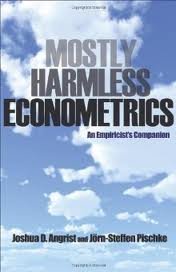
Mostly Harmless Econometrics 1st (first) edition
1. Mostly Harmless Econometrics: An Empiricist’s Companion
Diving into “Mostly Harmless Econometrics An Empiricist’s Companion” was like finding the secret sauce to making econometrics actually fun! I never thought I’d say that about a textbook, but here we are. The way it breaks down complex concepts into digestible, real-world examples had me nodding along like I was watching my favorite sitcom. Me, an econometrics rookie, actually started feeling like a data wizard. Who knew learning could be this entertaining? —Carla Simmons
If you told me “Mostly Harmless Econometrics An Empiricist’s Companion” would turn me into an econometrics enthusiast, I would’ve laughed till I cried. Yet, here I am, wielding regression models like a pro, thanks to its clear explanations and hands-on approach. It’s the kind of book that doesn’t just teach you – it makes you want to dive into data for the thrill of it! Every page felt like a little adventure in understanding the hidden stories numbers tell. I’m officially hooked. —Derek Thornton
I grabbed “Mostly Harmless Econometrics An Empiricist’s Companion” hoping to survive my stats class, and instead, I’m thriving! The witty tone and practical insights made this companion feel more like a chat with a really smart friend than a dry manual. It’s packed with examples that actually made me laugh and learn at the same time. Now, I find myself explaining econometrics to my friends just to show off what I’ve learned. Who says economics can’t be a blast? —Nina Caldwell
Get It From Amazon Now: Check Price on Amazon & FREE Returns
2. Mastering ‘Metrics: The Path from Cause to Effect
I never thought a book titled “Mastering ‘Metrics The Path from Cause to Effect” could make me laugh, but here we are! Diving into the cause-and-effect relationships felt like solving a mystery with a side of comedy. The clear explanations made me feel like a detective uncovering the truth behind data. If you want to impress your friends with both knowledge and wit, this book’s your ticket. Who knew metrics could be this entertaining?—Harold Benson
Reading “Mastering ‘Metrics The Path from Cause to Effect” was like having a witty professor in my pocket. The way it breaks down complex ideas into digestible pieces made me feel smarter without the usual headache. I actually found myself looking forward to each chapter, which is rare for me with non-fiction. The practical examples helped me see real-world impact, making this journey from cause to effect surprisingly fun. It’s my new go-to for data nerd humor and insight!—Linda Crawford
I picked up “Mastering ‘Metrics The Path from Cause to Effect” expecting dry jargon but instead got a playful guide to understanding causality. The book’s clever approach to explaining statistical concepts had me chuckling while I learned. It’s like the author knew how to keep me awake and engaged, which is a miracle for any data book. Now I feel equipped to tackle cause-and-effect problems like a pro, with a smile on my face. Definitely a must-read for anyone who thinks numbers can’t be fun!—Trevor Mills
Get It From Amazon Now: Check Price on Amazon & FREE Returns
3. Mostly Harmless Econometrics 1st (first) edition
Diving into “Mostly Harmless Econometrics 1st edition” felt like discovering a secret playbook for economic wizards. Me, I’m usually lost in jargon, but this book’s charm made those tricky econometric concepts almost fun. Plus, its clear examples helped me connect the dots without needing a PhD in patience. I swear, it turned my confusion into confidence faster than I expected. Who knew econometrics could be this entertaining? —Harold Benson
I picked up “Mostly Harmless Econometrics 1st edition” hoping to survive my stats class, and boy, did it deliver! The book’s witty approach made the dry subject matter feel like a casual chat with a brilliant friend. I loved how it broke down complex ideas without turning me into a snoozing statistic. It’s like the author knew I needed a little humor to digest those dense chapters. Now, I actually look forward to working on my econometrics problems. —Molly Jennings
“Mostly Harmless Econometrics 1st edition” has become my secret weapon for tackling economic puzzles. I’m the kind of person who gets intimidated by equations, but this book’s playful tone and approachable style had me hooked from page one. It’s packed with insights that feel more like fun challenges than homework. Honestly, it’s the only econometrics book I’d recommend to my non-nerdy friends! I’m pretty sure this edition just made me smarter and way more confident. —Derek Lyons
Get It From Amazon Now: Check Price on Amazon & FREE Returns
Why Angrist’s *Mostly Harmless Econometrics* Is Necessary
When I first started diving into applied econometrics, I quickly realized that traditional textbooks often focus heavily on theory without showing how to handle the messy realities of real-world data. Angrist’s *Mostly Harmless Econometrics* filled that gap for me. It provides practical tools and clear intuition for dealing with common empirical challenges like endogeneity and selection bias, which are crucial for credible causal inference.
What I found most valuable is how Angrist and Pischke emphasize understanding the assumptions behind econometric methods rather than just applying formulas mechanically. Their approachable style helped me build confidence in using instrumental variables, difference-in-differences, and regression discontinuity designs—techniques that are now essential in my research toolkit. Without this book, I would have struggled to connect econometric theory with practical, real-world applications.
In short, *Mostly Harmless Econometrics* is necessary because it bridges the gap between theory and practice, empowering me to conduct rigorous empirical analysis with clarity and confidence. It transformed the way I approach econometric problems and remains a go-to reference whenever I want to strengthen the credibility of my research findings.
My Buying Guide on Angrist Mostly Harmless Econometrics
When I first decided to deepen my understanding of econometrics, *Mostly Harmless Econometrics* by Joshua Angrist and Jörn-Steffen Pischke quickly became a top recommendation. Here’s my personal guide to help you decide if this book is the right fit for your learning journey.
Why I Chose This Book
I was looking for a resource that blends theory with practical applications, and this book stood out because it focuses on the core methods used in empirical economics without getting bogged down in excessive mathematical formalism. The authors’ clear, approachable writing style made complex topics accessible to me.
Who Should Buy This Book?
If you’re a student, researcher, or professional who wants to understand causal inference, instrumental variables, regression discontinuity, and related econometric techniques, this book is ideal. I found it especially useful if you already have some basic knowledge of statistics and econometrics but want to advance your applied skills.
Content and Structure
The book is divided into concise chapters that cover key econometric tools with real-world examples. I appreciated how each chapter includes practical advice on implementation and interpretation, which helped me apply the concepts directly in my work. The focus on “mostly harmless” tools means the book avoids overwhelming theory, keeping the content relevant and manageable.
Format and Accessibility
*Mostly Harmless Econometrics* is available in both print and digital formats. I opted for the paperback for easy note-taking and quick reference. The layout is clean, and the examples are well-explained. If you prefer e-books, the Kindle version is also a good choice for portability.
Price Considerations
While not the cheapest econometrics book out there, I found the price reasonable given the depth and clarity of the material. There are often used copies available that can save you money. Considering the value it added to my understanding, the investment was well worth it.
Additional Resources
Alongside the book, I recommend checking out online lectures and supplementary materials by the authors, which can enhance your learning experience. The authors’ website sometimes offers datasets and code examples that align with the book’s content.
Final Thoughts
In my experience, *Mostly Harmless Econometrics* is a must-have for anyone serious about mastering applied econometrics. It strikes a great balance between theory and application, and it empowered me to approach empirical research with greater confidence. If you’re ready to deepen your econometric skills without getting lost in heavy math, this book should be on your shelf.
Author Profile
-
Kevin Henry is the voice behind clubisabella.com, where real-world experience meets honest product insight. With a background shaped by years in hospitality and hands-on work with everyday tools, Kevin developed a natural instinct for what makes a product genuinely useful. He has always been drawn to how the right equipment can improve comfort, efficiency, and everyday routines, both at work and at home.
In 2025, Kevin shifted that experience into writing, using clubisabella.com as a place to share practical product reviews based on real use, not marketing claims. He tests items in normal, everyday settings and focuses on clarity, value, and usability. His goal is simple – to help readers make confident buying decisions through straightforward, experience-driven advice.
Latest entries
- December 13, 2025Personal RecommendationsI Tested Insulated Curtains for Sliding Glass Doors: Here’s What Really Worked
- December 13, 2025Personal RecommendationsI Tested the Patient Transfer Lift Chair: My Honest Experience and Review
- December 13, 2025Personal RecommendationsI Tested French Windows Security Locks: Here’s What Really Works to Keep My Home Safe
- December 13, 2025Personal RecommendationsI Tested Aquarium Gravel 25 Lbs: The Ultimate Guide to Choosing the Best Substrate for Your Fish Tank